
Traditional theory describes pain in terms of flow and nourishment. Christine starts somewhere more practical: where it hurts, when it began and how it affects your life.
Traditional Chinese medicine has a distinctive way of describing pain, often in terms of obstructed flow or a lack of nourishment to an area. These ideas belong to a long-standing theoretical framework. They do not, however, replace the need to understand what is actually happening when pain appears.
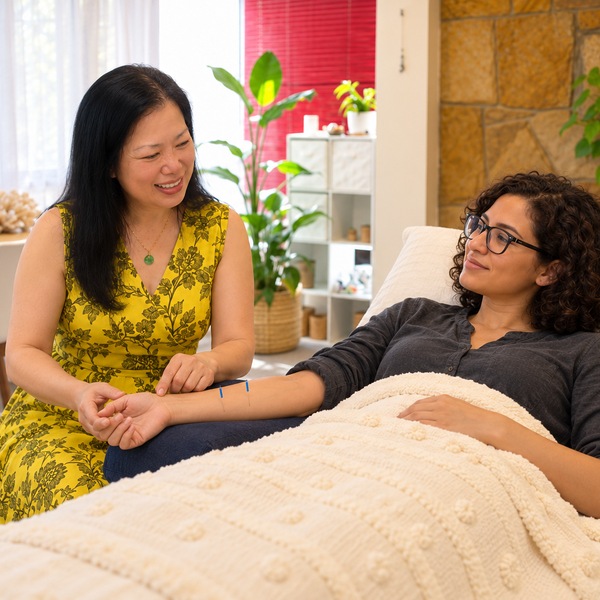
Pain that is new, severe, recurring or changing in character may need investigation. Seek medical help promptly if pain follows an injury, comes with fever, numbness or weakness, or is accompanied by other new symptoms. Dr Christine Shen, Acupuncturist, will encourage you to see your GP when further assessment seems sensible, and is glad to work alongside that care at the Freshwater clinic.
Rather than picking a technique from a list first, it helps to give Christine a clear account. Think about:
This information shapes the plan and gives you both a way to notice change over time.
Once Christine understands the problem, you can talk about goals. Try to separate the pain itself from the change you would value most. For some people that means being able to garden for longer; for others, simply understanding why the pain occurs, or recognising when another kind of assessment is needed. Ask how acupuncture will be checked against those goals and what would make her suggest adjusting course.
A few notes over a week, covering when pain flares and what eases it, can be surprisingly useful. Bring them to your Freshwater appointment. They often reveal patterns that are hard to recall on the spot, and they make the first conversation more focused.
Copyright© 2002-2026 visuallink© SaaS - Web Hosted Solutions, Design and Maintenance by Visual Link IT Pty Ltd - Software Solutions

Please Login or Sign up to be able to comment